Slab foundation building in Berkeley CA - a house slab on packed, drained ground
Planning a new building and weighing a slab against a crawl space? We prepare the ground and the drainage first, so the slab stays put.
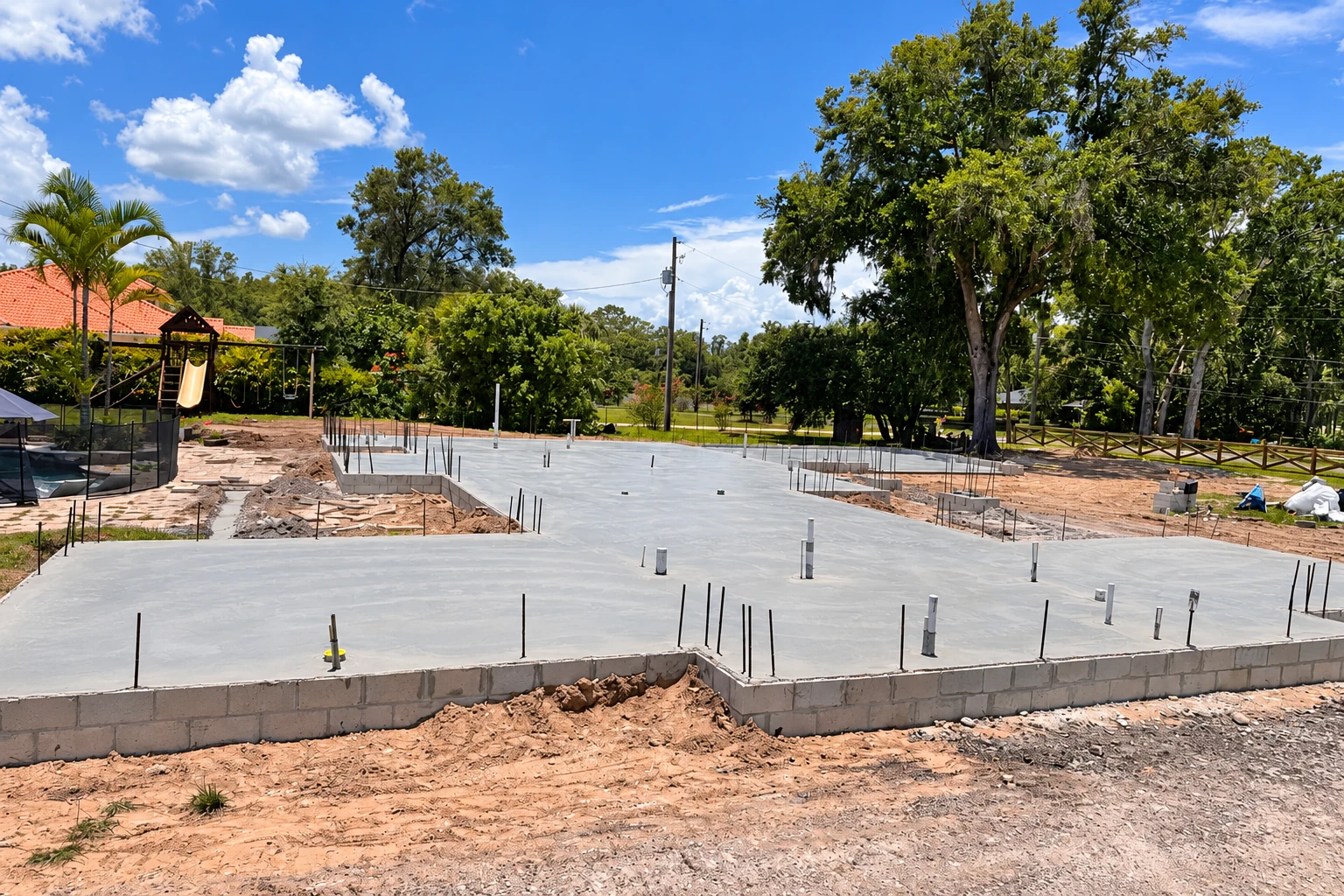
Cleared, packed ground
We dig out soft soil and compact what the slab sits on.
Water planned away
We set grading and downspouts with you so rain leaves the edge.
Permits handled
We find out what your city needs and file it.
Owner on site
I write the estimate and run the crew on your job.
Is a slab foundation right for your Berkeley lot?
Slab foundation building in Berkeley, CA means pouring a concrete slab right on prepared ground, with no basement or crawl space under it, so your building gets its base with less digging than a basement takes.
A slab is usually faster to build and can cost less when the site suits it. The trade-off is that there's no crawl space, so pipes under the floor are harder to reach later. If you'd rather keep that access, look at our foundation installation work. Most of a slab's future is decided before the pour, in the ground under it.
What moves your price is the slab's size, how much soft soil or loose fill has to come out and be packed back down, and how easily we can get equipment to the spot. The schedule mostly turns on the permit and the weather. I write the estimate out so you can see what's included before you decide.
- Ground cleared and compacted before the pour
- Grading and downspouts planned with you
- A written estimate you can read
- The why explained at every step
When does a slab foundation make sense for you?
Look into a slab when you're building new, replacing a failing one, or dealing with ground and water that a foundation has to handle well.
Building new on your lot
You're adding a house, a backyard cottage or an addition and need a base that sits right on the ground.
No need for a crawl space
You don't expect to need room under the floor for pipes or repairs, so a crawl space adds little for you.
Old slab cracked or sinking
The slab you're replacing has wide cracks or a low corner, which usually points to soft or poorly packed ground underneath.
Water pooling at the edge
After rain, water sits where the foundation meets the soil, or the downspouts empty right beside the wall.
Soft or filled ground
Part of the lot was filled in years ago or stays soggy, so the base needs digging out before anything is poured.
A slope or a nearby creek
Your lot sits on a hillside or near a creek bank, where the ground deserves a closer look before any slab plan.
Get your slab foundation estimate
Send your address, the slab size and any soil report you have. I reply within one business day to set up a free, obligation-free estimate at your site.
What I look at before a slab foundation
Before I recommend anything, I look at the ground and the water, because they decide how a slab holds up, under a house or a concrete parking lot.
The subgrade
The subgrade, the soil the slab rests on, gets dug out where it's soft and packed back down, since the slab can only be as firm as it is.
Where the rain runs
I see how the yard drains and where the downspouts empty, because water collecting at a slab's edge slowly turns into moisture and movement problems.
Soil that swells and shrinks
On soil that swells wet and shrinks dry, the trade group for post-tensioned slabs, ones with steel cables tightened after the pour, calls them a cost-efficient answer.
Where it gets thicker
Heavier loads usually get a thickened edge or extra footing detail, so I'll show you where your slab gets thicker and why.
What to expect on a slab foundation job
I plan the job around your project, your permit and the weather, and I walk you through each stage so you know what's happening and what comes next.
Call or send a request
You call or fill out the form, and we get back to you to set a time for me to come out.
Site visit
I come out myself, walk the lot with you, look at the ground and the drainage, and listen to what you're building.
Estimate and permits
You get a written estimate showing what's included, then we sort out the permit with your city or county office before anything's poured.
Prep and pour
Our crew clears and packs the ground and sets the forms and rebar, the steel that holds the slab together, while I run the job and meet the inspector when it's time.
Curing and walk-through
I walk you through curing, the slow hardening that gives the slab its strength, and what to do and avoid once we leave.
Why Berkeley homeowners call Heartland Berkeley Concrete Company for slab foundations
You get someone who explains the why before the how, so you understand your slab well enough to ask good questions, of us or anyone else.
The owner comes out
I look at the site and write your estimate myself, then I'm on site running our own crew through the work.
Working since 2023
I started this business in Berkeley in 2023, after working on concrete crews every summer all through school.
Licensed and insured for your job
We're licensed and insured. Ask about both at the estimate, the same way you'd check anyone working on your house.
Satisfaction guaranteed on every job
That's our promise on your slab. Call (341) 209-8254 or use the form to set up a visit to your site.
Slab foundation building in Berkeley's hills and flats
If your slab is for a new building, the City of Berkeley issues the building permit, and the documents it asks for depend on the type of building. So what your own job needs is something we confirm with the city early. We find out the requirements, file the paperwork and meet the inspector when it's time.
The city's hazard map shows high landslide potential in the Berkeley hills and along creek banks. Inside the state's mapped hazard zones, most new housing needs a site-specific ground study before a permit, though single-family frame houses up to two stories are exempt unless the city asks for more. We see lots like these in El Cerrito and Orinda too.
Building on a hillside lot? Call and ask about your slab.
(341) 209-8254Slab foundation questions from Berkeley
How much does a concrete slab foundation cost in the Bay Area?
A reinforced concrete slab in the Bay Area usually costs about $9 to $16 per square foot, which is the going range in the area, not a quote from us. Where your job lands depends on the size, the ground work and the access, and my written estimate shows what's included.
How do I apply for a building permit in Berkeley for a new slab foundation?
Berkeley building permits are applied for through the city's online permit portal, where you can track the application, upload more documents and schedule inspections. Since we file the paperwork for you, you can mostly use it to follow along.
Is my street in Berkeley's liquefaction zone?
It is if you're between the shoreline and San Pablo Avenue in Northwest Berkeley, or between the shoreline and McGee Avenue in Southwest Berkeley, according to the city's hazard map. Liquefaction is when shaking makes wet ground act loose, and the zone also takes in the Marina, Aquatic Park, and Codornices and Strawberry creeks, so I check your lot against the map before we plan the slab.
What causes a concrete slab to crack or settle?
Most slabs crack or settle because of what's under them, such as roots and other organic material, soft spots, loose fill or soil that was never packed well. Water at the edge, which I covered above, makes it worse over time, so we deal with the ground before the pour.
How do I keep moisture from coming up through a concrete slab?
A federal program, the EPA's Indoor AirPlus, recommends a drainage pad under the slab, a layer of gravel or of sand with fabric matting, so water can't wick up into the concrete. Grading and downspouts that carry rain away from the edge handle the water from above.
What license does a concrete contractor need in California?
California's licensing classes give concrete its own trade, the C-8 Concrete Contractor, which covers forming, pouring, placing, finishing and installing concrete work. Ask whoever bids your slab about their license, and I'll answer the same question at your estimate.
Get a slab foundation estimate in Berkeley
We pick up into the evening, every day of the week, so call (341) 209-8254 or send the form with your address and slab size.