Foundation installation in Berkeley CA - the right foundation for your lot
Building new or replacing an old foundation? We help you pick slab or raised for your lot, then build it on solid ground.
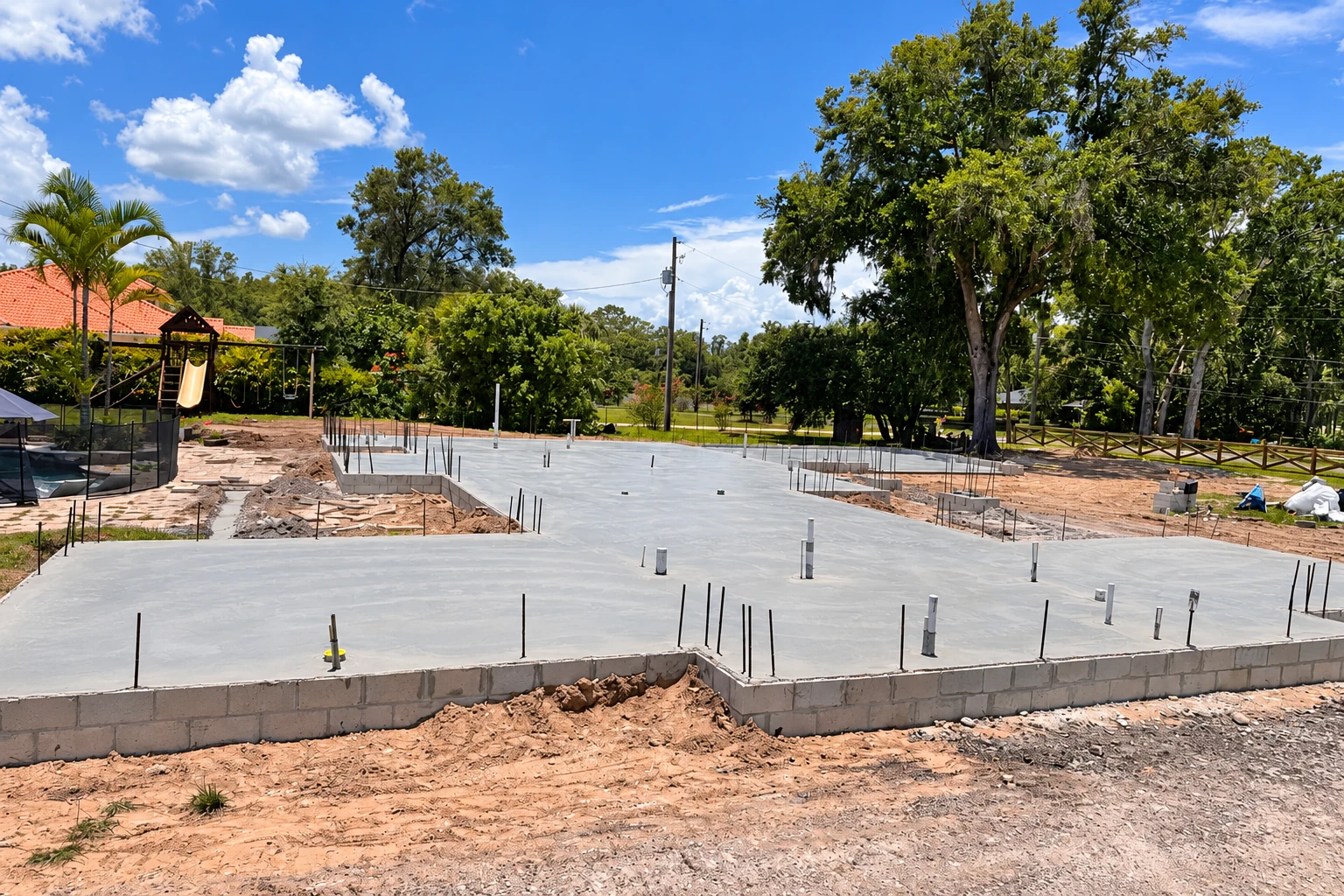
Slab or raised
We help you pick the type that suits your lot.
Base dug and packed
Our crew digs out and compacts the ground before forming.
Forms, steel and pour
We set the forms and steel, then pour and finish.
Plain answers
I explain each step before our crew starts on it.
Should your new foundation be a slab or a raised one?
Foundation installation in Berkeley starts with picking a slab or a raised foundation that fits your lot, budget and soils report. Then our crew digs, forms and pours the concrete your house will sit on.
A slab is one continuous sheet of concrete poured directly on the ground, while a raised foundation lifts your floor up over a crawlspace. One engineering firm's guide says the choice leans heavily on your budget, the look you're after and your soils report. It also says the expansion index, a measure of how much the soil swells when it gets wet, is the figure to bring to that first design talk.
So I go through those three things with you and your designer before anyone settles on a type. Your price moves with the type, the footprint, the slope, the access and how much digging and steel the plans call for. The schedule mostly turns on finishing the design and getting the permit, and your written estimate shows what's included.
- A foundation type matched to your lot
- Ground dug out and packed, not raked
- Steel and forms set to the plans
- Plain explanations at every step
How do you know your house needs a new foundation?
Look into a new foundation when the house starts showing it's moving, an inspection flags the old one, or you're building new or adding on.
Cracks that keep growing
Cracks in the concrete under your house that get wider over time usually mean the foundation is moving, not just drying.
Floors that slope or dip
If a ball rolls across the room or the floor sags near one wall, the support underneath may have settled or failed.
Doors and windows sticking
Doors that suddenly rub the frame and windows that won't close can mean the house has shifted on what's under it.
Crumbling old concrete
Concrete that chips away when you scrape it, or an old brick footing, often can't carry the house the way it should anymore.
An inspection flagged it
When a home inspector or engineer calls your foundation substandard after you buy, that's a clear reason to have it looked at.
Building new or adding on
A new house, an addition or a backyard cottage starts with picking a foundation type before the rest of the design moves ahead.
Request your foundation estimate
Tell us about your lot and your plans. We reply within one business day, and I come out myself for a free estimate with no obligation.
What we look at before installing a foundation
Before I recommend a slab or a raised foundation, I walk the lot and go through your plans and soils report with you and your designer.
Your soils report
We read it with you and your designer, because the ground under the house shapes how deep and how stiff the foundation has to be.
How the lot falls
We look at how the ground slopes across the footprint, because that changes how much digging and forming the job takes.
Where the water runs
We watch where rain drains so the finished grade sends water away from the house instead of toward it.
Access and what's there now
We check how our crew and equipment get in, and on a replacement, what's under the house now and how it's holding up.
What to expect on a foundation installation
We plan the job around your design, your permit and your household, and I explain each stage before it starts so nothing happening under your house is a surprise.
Your first call
You call or send a request, tell us what you're building or replacing, and we set a time for me to come out.
The site visit
I walk the lot, look over your plans and soils report, and talk through slab versus raised with you and your designer.
Estimate and permits
You get a written estimate showing what's included, then we sort out the permit with your city or county office before anything is poured.
Prep, forms and pour
Our crew digs, packs the base, sets forms and rebar, the steel bars that tie the concrete together, then pours. The city inspects along the way to check the work matches the approved plans, and I meet the inspector.
Curing and walk-through
I explain curing, the slow wait while the concrete gains strength, and walk you through the finished work before we leave.
Why Berkeley homeowners call Heartland Berkeley Concrete Company for foundations
I started this business in Berkeley in 2023 after working on concrete crews every summer through school, and I care most about the work you can't see once the house goes up.
I write your estimate myself
The person who walks your lot is the one running the job on site, and our own crew does the work.
Licensed concrete work in California
We're licensed and insured. The state licensing board describes a concrete contractor as one who forms, pours, finishes and installs concrete, which is what we do.
The base gets the budget
When money gets tight, the base is the first thing people want to trim. I'd cut somewhere else, because everything above rests on that packed ground.
Satisfaction guaranteed on every job
That's our promise, and it starts with plain talk about your job. Call (341) 209-8254 to set up your site visit.
Foundation installation in Berkeley and nearby cities
Berkeley asks for a building permit, with its own application and plan set, when the job is qualifying seismic work such as replacing a substandard foundation. For other foundation work, we find out from the city's Permit Service Center or your county office what your job needs, file the paperwork and meet the inspector when it's time.
Around Berkeley and nearby cities like Oakland and Albany, we see plenty of older homes on raised foundations, hillside lots and tight side yards that make access part of the plan. Small property owners also call us for concrete parking lot building, done with the same care for the base.
Want to talk through your Berkeley foundation before you commit?
(341) 209-8254Foundation questions we hear most
Which foundation type works best on a sloped lot in Berkeley?
A raised foundation usually handles sloping ground better, according to one engineering firm's guide, because it avoids massive retaining walls and hauling dirt away. On a steep lot, that can mean less wall to build and less soil to export than a slab would take. I'll look at your grade with you and your designer before either one is drawn.
How much does a slab foundation cost in Berkeley?
An installed slab foundation in the San Francisco area usually costs about $7 to $18 per square foot. That range is for slabs only, and where your job lands depends on the size, slope, access and what your soils report calls for. Your written estimate shows what's included.
Can a new homeowner in Berkeley get money back for foundation work?
Often, yes. Berkeley's Seismic Retrofit Rebate can refund up to a third of the transfer tax you paid, for qualifying work such as bolting the foundation to the mudsill, the wood plate the house sits on, or repairing or replacing a substandard foundation. You have up to one year after the sale is recorded with Alameda County to finish the work and file, so check the city's seismic rebate page early.
How do I build a foundation over expansive clay soil?
One engineering firm's guide describes drilling deep shafts, called piers, through a layer of expansive clay so they reach stable soil or bedrock below. Whether your house needs them is up to your soils report and your engineer, and we build to what they call for.
What does a raised foundation with a crawlspace give me?
A crawlspace keeps your plumbing, mechanical and electrical lines fully reachable, which helps if you plan a remodel or expect repairs later. The same engineering guide describes a raised foundation as a perimeter stem wall, the low concrete wall around the edge, sitting on concrete footings, with the inside framing resting on concrete piers.
What causes a new concrete foundation to crack?
Most bad cracks start with ground that was raked level instead of dug out and packed, so the concrete settles unevenly with the dirt. A pour in midday heat or a rushed cure can also leave weak concrete, which is why we pack the base and plan the pour time. Concrete still shrinks a little as it dries, so hairline cracks can show up even on good work.
Book your Berkeley foundation site visit
Call (341) 209-8254 or send the form with your soils report and plans handy, so we can talk slab or raised on the first visit.