
Concrete sidewalk building in Berkeley CA - a walk that stays level and safe
Cracked, lifted or sinking sidewalk in front of your house? We rebuild it on a packed base so it sits flat and sheds water.
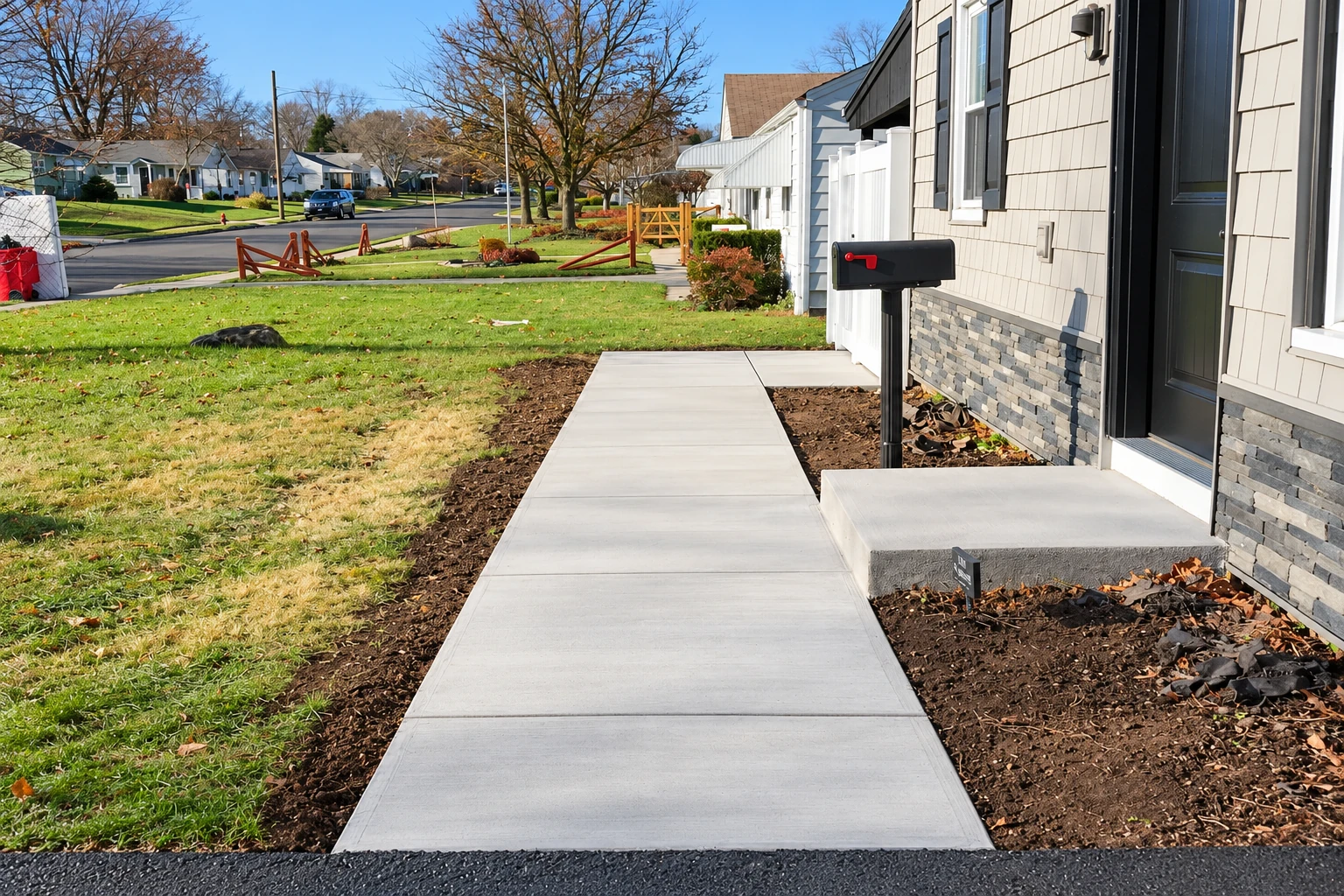
Tear-out and haul-away
We break out the old walk and take it away.
Dug and packed base
We dig out soft dirt and pack what the slab sits on.
Forms, pour and finish
Straight forms, a careful pour and a textured top for grip.
City paperwork handled
We file for the permit and meet the inspector.
What goes into building a new concrete sidewalk in Berkeley?
Concrete sidewalk building in Berkeley means we break out the old walk, dig and pack a firm base, then form, pour and finish new concrete so the sidewalk by your house sits flat, gives good footing and sheds water.
Most calls start with a walk that a root has pushed up, that's broken into pieces or that's sunk at one end so water sits on it. I care most about the part you won't see once we leave, the subgrade, the packed ground under the concrete, because a walk poured on loose dirt settles right along with it.
The price moves with the size of the walk, how much old concrete comes out and how much soft ground we replace under it. The schedule mostly turns on the city's permit and inspection and on a dry day to pour, and we handle the city side for you. Your written estimate shows what's included.
- A base dug out and packed firm
- Joints placed where we choose
- A textured top that isn't slick
- Permit and inspection handled for you
How do you know your sidewalk needs replacing?
If the walk in front of your house trips people, holds water or keeps breaking up, it's usually time to look at more than patching.
Raised edges you trip on
When one slab sits higher than the next, someone will catch a toe on it, and patching rarely fixes a lift for long.
Roots pushing up the walk
A root growing under the walk can tip a whole section up, and the cracks usually spread out from there.
Water pooling after rain
Puddles that sit on the walk mean the slab has settled or tilted, and that water works its way into the dirt underneath.
Cracks across several slabs
One crack is normal for concrete, but a slab broken into several pieces usually means the base under it has moved.
Sinking at one end
A section that drops toward the street or the house usually sat on loose fill that was never dug out and packed.
Chipping, flaking top
When the surface turns dusty or flakes off, it was often poured in midday heat or finished while too wet.
Get a free sidewalk estimate
Send your address, the rough length of walk and photos of any damage. We reply within one business day, and I come out for a free, no-obligation estimate.
What we check before building your sidewalk
Before I recommend anything, I look at the ground, the water and what's growing around the walk, because those decide whether new concrete stays flat.
The ground underneath
I check how soft the dirt is and how much has to come out, because a walk on loose fill sinks with it.
Where the water runs
We look at which way rain moves across the walk so the new slab sheds toward the street and not toward your house.
Roots near the walk
I note any roots under the old slab, since whatever lifted it once can push on the new walk too.
Where the joints go
We plan the control joints, shallow cuts that give concrete a chosen place to crack, so any crack follows a straight line.
How a sidewalk job runs with us
We plan the job around your house, so you know when the city comes out, when we pour and how long to keep people and cars off the new walk.
Your call or request
You call or send the form with your address and a few photos, and we set a time for me to come out.
The site visit
I walk the sidewalk with you, check the ground, the roots and where water runs, and listen to what you need.
Estimate and permit
You get a written estimate that shows what's included, then we file with the city and line up the inspection before any pour.
Prep and the pour
We dig out, pack the base and set forms, and we pour only after the city's inspector approves them and no rain is coming.
Curing and walk-through
We finish the top and cut the joints, then walk you through curing, the slow hardening, and how long to stay off it.
Why Berkeley homeowners call Heartland Berkeley Concrete Company for sidewalks
You can count on plain talk about the work you can't see, the ground prep, the drainage and the joints, because that's where a sidewalk goes right or wrong.
The owner writes your estimate
I come out to look at your sidewalk and write the estimate myself. Our own crew does the work, and I'm on site running it.
Concrete work since 2023
I worked concrete crews every summer through school, started this business in Berkeley in 2023, and still explain the why behind each step.
Licensed and insured, check every bidder
We're licensed and insured. The city tells owners to hire a licensed concrete contractor with a City of Berkeley business license, so ask every bidder for both.
Satisfaction guaranteed on every job
I walk the finished sidewalk with you before we leave, and I can look at garage floor concrete or other work on the same visit.
Concrete sidewalk building in Berkeley and nearby cities
Sidewalk work in Berkeley needs an Engineering Permit because it touches city infrastructure, and the city's Permit Service Center takes the application, which we file for you. Between your property line and the curb, the city allows only standard finished concrete or soil unless the Director of Public Works approves something else, so plan any decorative concrete for your side of the line.
Trees in that strip by the street belong to the city, and only city staff may prune or remove one, even when it's lifting your walk. The city also calls for a broom finish, a brushed texture that gives shoes grip, with the strokes running square to the curb. We see the same root-lifted walks in Albany and Oakland.
Got a Berkeley sidewalk that needs replacing?
(341) 209-8254Sidewalk questions we hear
Am I responsible for the sidewalk in front of my house in Berkeley?
Yes, in Berkeley the property owner is responsible for keeping the sidewalk next to their property safe, including fixing cracks and other damage. You can hire a contractor at your own cost, or ask the city for help through its 50-50 sidewalk program, where the city does the repair and bills you for half. If you'd like to compare, I'll write you an estimate for doing it ourselves.
How much does a new concrete sidewalk cost?
A concrete sidewalk in San Francisco usually costs about $5 to $12 per square foot, which is the closest local figure we have and not our price. In Berkeley, yours moves with how much old concrete comes out, how much base we rebuild and the permit work. The estimate I write at your house gives you a Berkeley price.
How long before we can walk on a new concrete sidewalk?
The city's rules say new concrete should stay closed to foot traffic for 24 to 72 hours and to cars for 72 hours. Plan another way in and out of the house, and other parking, for that time. Before we leave, I'll tell you how long to keep people and cars off your walk.
What is the best way to keep a new sidewalk from cracking?
Build it on a dug-out, packed base and cut control joints so any crack forms in a straight line you chose. One general guide advises removing topsoil and plant material and compacting disturbed fill so the walk has even support. Concrete can still crack, but on a firm base with joints in the right places it usually cracks where it's supposed to.
What causes a concrete sidewalk to sink or lift?
Sinking usually comes from a base that was raked level instead of dug out and packed, so the dirt settles and the slab follows it down. Lifting usually comes from roots growing under the slab. I sort out which one you have at the visit, since it changes how much ground we dig out.
Can I drive across a new concrete sidewalk to my driveway?
Yes, once it has cured, though one general guide says the spot a car crosses may need a thicker or reinforced section. Rebar, steel bars set inside the slab to hold it together, is one way to reinforce it. Tell me about any crossing at the visit and I'll explain what your walk needs there.
Ask Heartland Berkeley Concrete Company for an estimate
Since the pour waits on the city's inspection and a dry day, calling (341) 209-8254 early gives us more room to schedule it.